A review of Beauty in the Word: Rethinking the Foundations of Education by Stratford Caldecott
Americans have never been more aware that our schools are letting our children down. We face the disturbing truth again and again on the radio, in the newspapers, and in political speeches. A few blocks from my home a billboard announces, “30% of High School Students Drop Out.” Films like Waiting for Superman expose the bureaucracy and special interests that made the problem so intractable. Nevertheless, we hold out hope that another program, another initiative, or another piece of legislation might come in time to alleviate the worst effects of the problem.
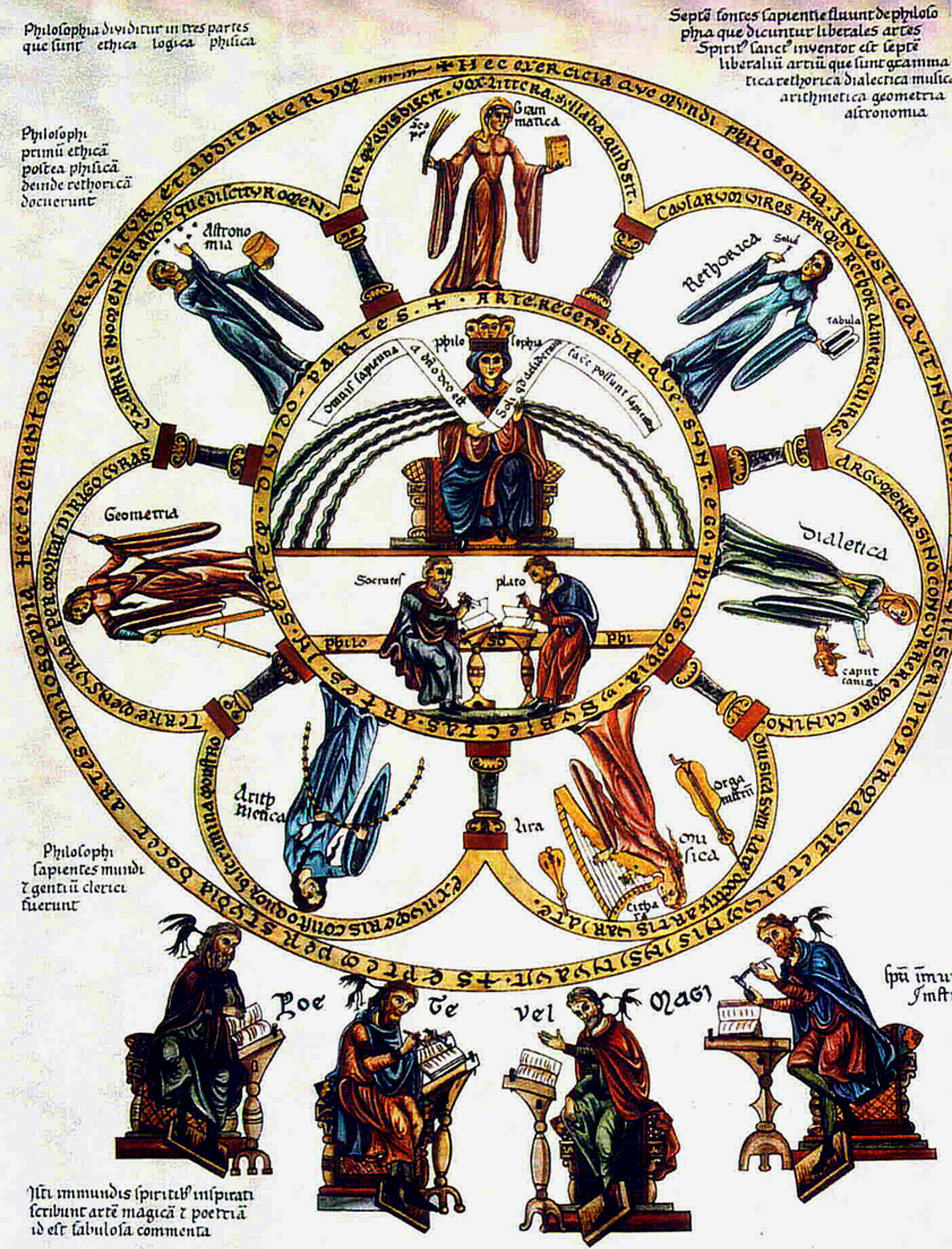
What we don’t often consider is that our educational system might be, to quote Donald Kagan, a professor of Classics at Yale University, “a system rotting from the head down,” that is to say, a system sabotaged by its own ideas. We don’t consider that our foundational concept of what it means to be an educated human being might demand revision. Stratford Caldecott’s newest book, Beauty in the Word: Rethinking the Foundations of Education offers just such a revision, taking us back to an education founded on the liberal arts. While many of us will associate the liberal arts with small, elite four-year colleges, Caldecott explains that they were “intended for the cultivation of freedom and the raising of our humanity to the highest possible level.” His book concerns the first three liberal arts, the “Trivium,” comprised of Grammar, Dialectic, and Rhetoric. The Trivium, Caldecott explains, is not so much a field of study or a subject as it is an essential preparation for all subsequent knowledge, the very foundation itself.
If Grammar, Dialectic, and Rhetoric sound daunting, Caldecott adeptly situates them in everyday life. He makes no calls for his reader to memorize Latin declensions or read Cicero–at least not at first. What he does suggest, however, is that we can locate the basis for Grammar, Dialectic, and Rhetoric in the universal practices of Remembering, Thinking, and Speaking… Read the rest of the review at The Englewood Review of Books
 Brett Beasley